
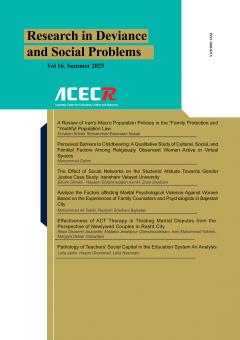

موانع ادراک شده فرزندآوری: مطالعهای کیفی عوامل فرهنگی، اجتماعی و خانوادگی در میان زنان مذهبی فعال در فضای مجازی
الموضوعات : Research on Iranian social issues
1 - دانشجوی دکتری جمعیتشناسی، دانشکده علوم اجتماعی، دانشگاه تهران، ایران
الکلمات المفتاحية: پدیدارشناسی, فرزندآوری, زنان مذهبی, موانع ساختاری, تجربه زیسته,
ملخص المقالة :
در بستر تحولات جمعیتشناختی و اجتماعی ایران معاصر، درک عمیق تجربههای زیسته زنان درباره فرزندآوری، اهمیت بالایی یافته است. این پژوهش با هدف کشف و تفسیر تجربههای زیسته زنان مذهبی فعال در فضای مجازی درباره عوامل، موانع و پیامدهای تصمیمگیری درباره فرزندآوری انجام گرفت. مطالعه با رویکرد پدیدارشناسی تفسیری و روش کیفی طی سالهای 1401 و 1402 و از طریق مصاحبههای حضوری و متنی و آنلاین صورت پذیرفت. از طریق نمونهگیری هدفمند و روش گلوله برفی، 32 زن مذهبی فعال در فضای مجازی انتخاب شدند. دادهها از طریق مصاحبههای عمیق نیمهساختاریافته تا رسیدن به اشباع نظری گردآوری شد. تحلیل دادهها با استفاده از روش تحلیل مضمون کلارک و براون در چندین مرحله شامل کدگذاری اولیه، استخراج مضامین و تدوین مضامین نهایی صورت گرفت. یافتهها از تحلیل تجربههای زیسته مشارکتکنندگان، سه مضمون اصلی استخراج شد که عبارتند از درک زنان از فقدان حمایت اجتماعی، زیست بوم بازدارنده فرزندآوری و ابهام در آینده و عدم کنترل آن است. تجربۀ زیسته زنان با دینداری بالا درباره فرزندآوری، پدیدهای پیچیده و چندوجهی است که در تقابل میان ارزشهای دینی- سنتی و واقعیتهای اجتماعی و اقتصادی معاصر شکل میگیرد. مشارکتکنندگان علیرغم پایبندی به نقش مادری، تحت فشار ساختارهای اجتماعی غیر حامی ناکافی، نگرانیهای اقتصادی و اضطراب از آینده، تصمیمگیری درباره فرزندآوری را به تعویق میاندازند یا از آن اجتناب میکنند. این یافتهها، ضرورت توجه به ابعاد ساختاری و حمایتی فرزندآوری در کنار درنظرگیری تجربههای زیسته زنان را برای سیاستگذاریهای جمعیتی مؤثر نشان میدهد.
افشانی، سیدعلیرضا و آزاده ابویی و علی روحانی (1401) تجربۀ زیستۀ زنان نابارور از مسئلۀ بیفرزندی، زن در توسعه و سیاست، 20(1)، صص 1-21.
https://doi.org/10.22059/jwdp.2021.327319.1008049.
تاجبخش، غلامرضا (۱۴۰۲) «کاوشی در فهم تجربه زیسته زوجین از فرزندآوری در استان لرستان»، پژوهش انحرافات و مسائل اجتماعی، سال سوم، شماره ۸، صص 135- ۱۶۶.
https://risi.ihss.ac.ir/Article/46195.
خدیوزاده، طلعت و مروارید ایرانی (۱۳۹۷) «ارتباط بین باورهای دینی و رفتارهای باروری در زنان سنین باروری شهر مشهد در سال ۱۳۹۵»، مجله دانشگاه علوم پزشکی مازندران، 28(167)، صص 133-144.
http://jmums.mazums.ac.ir/article--10531-fa.html.
شاوردي، توران و رضا صحراگرد منفرد (۱۴۰۱) «آسیبشناسی تأثیر استفاده از شبکههای اجتماعی بر دینداری دختران و زنان»، پژوهش انحرافات و مسائل اجتماعی، سال دوم، شماره ۴، صص ۳۵- ۶۱.
https://risi.ihss.ac.ir/Article/38481/FullText.
طالبی اردکانی، رها و بیژن زارع و رضا صفریشالی و علیرضا کریمی (۱۴۰3) «جایگاه دینداری در تغییرات امید اجتماعی شهروندان تهرانی»، پژوهش انحرافات و مسائل اجتماعی، ۳(۸)، صص ۷۱-۱۰۳.
https://risi.ihss.ac.ir/fa/Article/46799.
کاوه فیروز، زینب و محمدجلال عباسی شوازی و سیدحسین سراجزاده و نگار رمضی (1400) رابطۀ دینداری و ارزشهای خانواده با تمایلات و قصد فرزندآوری در میان زنان متأهل شهر تهران. مطالعات و تحقیقات اجتماعی در ایران، 10(2)، صص 587-623.
doi: 10.22059/jisr.2020.302336.1064.
مدیری، فاطمه (1396) «بررسی مقایسهای تأثیر دین¬داری و نگرشهای جنسیتی بر قصد فرزندآوری به تفکیک جنسیت در شهر تهران»، برنامه¬ریزی رفاه و توسعه اجتماعی، ۸(۳۲).
وزارت فرهنگ و ارشاد اسلامی (1402) پیمایش ملی ارزشها و نگرشهای ایرانیان 1402، پژوهشگاه فرهنگ، هنر و ارتباطات، دفتر طرحهای ملی.
Abbasi, A., Sadeghi, R., Maleki, A., & Balakhani, G. (2022) A meta- analysis of factors related to fertility attitudes, desires, and childbearing intentions in Iranian studies. Interdisciplinary Studies in the Humanities, 14(4), 63- 92.
doi: 10.22035/isih.2021.4546.4509.
Ajzen, I., & Klobas, J. (2013). Fertility intentions. Demographic Research, 29, 203–232. https://doi.org/10.4054/demres.2013.29.8.
Jalal Abbasi-Shavazi, M., & McDonald, P. (2006). FERTILITY DECLINE IN THE ISLAMIC REPUBLIC OF IRAN: 1972–2000. Asian Population Studies, 2(3), 217–237. https://doi.org/10.1080/17441730601073789.
Ajzen, I. (1991) The theory of planned behavior. Organizational Behavior and Human Decision Processes, 50(2), 179–211.
. https://doi.org/10.1016/0749-5978(91)90020-T. Alomair, N., Alageel, S., Davies, N., & Bailey, J. V. (2020) Factors influencing sexual and reproductive health of Muslim women: A systematic review. Reproductive Health, 17(1), 33.
. https://doi.org/10.1186/s12978-020-0888-1.
Bandura, A. (1997) Self- efficacy: The exercise of control. W.H. Freeman and Company.
Becker, G. S. (1991) A treatise on the family (Enlarged ed.). Harvard University Press.
.https://www.scirp.org/reference/referencespapers?referenceid=1258277.
Bein, C., Mynarska, M., & Gauthier, A. H. (2021) Do costs and benefits of children matter for religious people? Perceived consequences of parenthood and fertility intentions in Poland. Journal of Biosocial Science, 53(3), 419–435. https://doi:10.1017/S0021932020000280.
Bourdieu, P. (1986) The forms of capital. In J. Richardson (Ed.), Handbook of theory and research for the sociology of education (pp. 241–258). New York: Greenwood.
https://www.marxists.org/reference/subject/philosophy/works/fr/bourdieu-forms-capital.htm.
Brainerd, E., & Malkova, O. (2025) How religion mediates the fertility response to maternity benefits. IZA Institute of Labor Economics.
https://www.iza.org/en/publications/dp/18081/how-religion-mediates-the-fertility-response-to-maternity-benefits.
Creswell, J. W. (2013) Qualitative inquiry and research design: Choosing among five traditions (3rd ed.). Sage Publications.
https://www.scirp.org/reference/ReferencesPapers?ReferenceID=1807302.
Dantis, C., Rizzi, E. L., & Baudin, T. (2023). The Association between Religiosity and Fertility Intentions Via Grandparenting: Evidence from GGS Data.
European journal of population = Revue europeenne de demographie, 39(1), 1. https://doi.org/10.1007/s10680- 023- 09652- 9.
Giddens, A. (1991) Modernity and self- identity: Self and society in the late modern age. Stanford University Press.
Hawkey, A. J., Ussher, J. M., & Perz, J. (2018) "If you don't have a baby, you can't be in our culture": Migrant and refugee women's experiences and constructions of fertility and fertility control. Women's Reproductive Health, 5(2), 75- 98.
https://doi.org/10.1080/23293691.2018.1463728.
Hayford, S. R., & Morgan, S. P. (2008) Religiosity and Fertility in the United States: The Role of Fertility Intentions. Social forces; a scientific medium of social study and interpretation, 86(3), 1163–1188. https://doi.org/10.1353/sof.0.0000.
Kearney, A. L., & White, K. M. (2016) Examining the psychosocial determinants of women's decisions to delay childbearing. Human Reproduction, 31(8), 1776- 1787.
https://doi.org/10.1093/humrep/dew124.
Lee, J., Kim, S., & Nam, S. H. (2025) "Living with silence and shame": A meta- synthesis of women's lived experiences of infertility- related stigma. International Journal of Women's Health, 17, 1- 15. https://doi.org/10.2147/IJWH.S539531.
Lesthaeghe, R. (2010) The unfolding story of the second demographic transition. Population and Development Review, 36(2), 211–251.
https://doi.org/10.1111/j.1728-4457.2010.00328.x .
Merleau- Ponty, M. (1962) Phenomenology of perception (C. Smith, Trans.). Routledge. (Original work published 1945).
https://voidnetwork.gr/wp-content/uploads/2016/09/Phenomenology-of-Perception-by-Maurice-Merleau-Ponty.pdf.
Murdock, Kyle. (2012) An Examination of Parental Self- Efficacy Among Mothers and Fathers. Psychology of Men & Masculinity. 14. 314- 323.
https://psycnet.apa.org/doi/10.1037/a0027009 .
Rivedal, S., Groven, K. S., & Aasbø, G. (2025) Working mothers' bodily and temporal experiences of caring for small children: A phenomenological study of the mommy- body. NORA- Nordic Journal of Feminist and Gender Research, 33(1), 1- 14. https://doi.org/10.1080/08038740.2025.2550420.
Vignoli, D., Guetto, R., Bazzani, G., Pirani, E., & Minello, A. (2020) A reflection on economic uncertainty and fertility in Europe: The Narrative Framework. European Journal of Population, 36(4), 743–768.
https://doi.org/10.1186/s41118-020-00094-3.
Wittkowski, A., Garrett, C., Calam, R., & Weisberg, D. (2017) Self- report measures of parental self- efficacy: A systematic review of the current literature. Journal of Child and Family Studies, 26(11), 2960–2978. https://doi.org/10.1007/s10826- 017- 0830- 5.
Yadollahpour, M. H., Bakouei, F., Khafri, S., & Salimi, T. (2024). Religiosity and attitudes toward childbearing among Iranian college students: A cross-sectional study. Current Research in Medical Sciences, 1(1), 15-22.
http://crms.mubabol.ac.ir/article-1-193-en.html.
Safari-Faramani, R., Haghdoost, A. A., Baneshi, M. R., & Dehnavieh, R. (2018). Exploring the perception of childbearing barriers in a low fertility subgroup of Iran: a qualitative study. Electronic physician, 10(6), 6927–6934. https://doi.org/10.19082/6927.
Behjati-Ardakani, Z., Navabakhsh, M., & Hosseini, S. H. (2017). Sociological Study on the Transformation of Fertility and Childbearing Concept in Iran. Journal of reproduction & infertility, 18(1), 153–161. https://pmc.ncbi.nlm.nih.gov/articles/PMC5359852/.
