
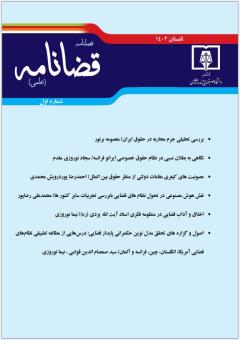

مصونیت های کیفری مقامات دولتی از منظر حقوق بین الملل
محورهای موضوعی : رویه در حقوق بین الملل
1 - گروه فقه و حقوق اسلامی، دانشکده الهیات اسلامی، دانشگاه شیراز، شیراز، ایران
کلید واژه: مصونیت, مقامات دولتی, دادگاههای بینالمللی, جنایات بینالمللی, دیوان کیفری بینالمللی,
چکیده مقاله :
این تحقیق به بررسی مفهوم و محدودیتهای مصونیت مقامات دولتی در محاکمات کیفری بینالمللی میپردازد. در گذشته، مصونیت مقامات بلندپایه دولتی از محاکمه در دادگاههای بینالمللی بهعنوان یک اصل پذیرفته شده بود، اما تحولات حقوقی و قضائی در نیمه دوم قرن بیستم، بهویژه پس از تأسیس دیوان کیفری بینالمللی، این مفهوم را به چالش کشیده است. بر اساس اساسنامه دیوان کیفری بینالمللی و رویههای قضائی جدید، مقامات دولتی که مرتکب جنایات بینالمللی مانند نسلکشی، جنایات جنگی و جرایم علیه بشریت شوند، دیگر از مصونیت شخصی یا شغلی برخوردار نخواهند بود. این مقاله بررسی میکند که آیا هنوز مقامات دولتی پس از برکناری از مقام خود از مصونیت شغلی برخوردار هستند یا خیر، و چگونه محاکم ملی و بینالمللی میتوانند با این مسئله برخورد کنند. همچنین، به تحلیل پروندههای مهم بینالمللی از جمله محاکمه آگوستو پینوشه و چارلز تیلور پرداخته و آثار حقوقی آنها بر تغییرات موجود در صلاحیت محاکم بینالمللی و ملی را بررسی میکند.
This study examines the concept and limitations of immunity for government officials in international criminal trials. In the past, the immunity of high-ranking government officials from prosecution in international courts was considered a widely accepted principle. However, legal and judicial developments in the second half of the 20th century, particularly after the establishment of the International Criminal Court, have challenged this concept. According to the Rome Statute of the International Criminal Court and recent judicial practices, government officials who commit international crimes such as genocide, war crimes, and crimes against humanity are no longer entitled to personal or official immunity. This paper investigates whether government officials continue to benefit from official immunity after being removed from office and how both national and international courts can address this issue. Additionally, it analyzes significant international cases, including the trials of Augusto Pinochet and Charles Taylor, and examines their legal implications on changes in the jurisdiction of national and international courts.
Cambridge University Press. (2020). ICJ Judgement on the Belgium v. Congo Case: A Cautious Stand on Immunity from Prosecution for International Crimes. Retrieved from https://www.cambridge.org
Council of Europe. (2020). European Human Rights and Universal Jurisdiction. Retrieved from https://rm.coe.int
EJIL Talk. (2006). Pinochet’s Arrest: A Milestone for Universal Jurisdiction. Retrieved from https://www.ejiltalk.org
European Journal of International Law (EJIL). (2006). The Pinochet Case and International Law. Retrieved from https://www.ejil.org
FIBGAR. (2006). Pinochet’s Arrest and the Milestone for Universal Jurisdiction. Retrieved from https://fibgar.es
Flour, Jean, Aubert, Jean-Louis, & Savaux, Emmanuel. (2002). Les obligations, L'acte juridique (2nd ed.). A. Colin & Delta.
International Review of the Red Cross (ICRC). (2020). Universal Jurisdiction and the Rule of Law. Retrieved from https://international-review.icrc.org
Just Security. (2020). The Absolute Clarity of International Legal Practice’s Rejection of Immunity before International Criminal Courts. Retrieved from https://www.justsecurity.org
Marity, Georges, & Raynaud, Philippe. (1988). Droit Civil, Les obligations (2nd ed., Vol. 1). Sirey.
Mazeaud, Henri Léon, & Chabas, François. (1985). Leçons de Droit Civil (7th ed., Vol. 2). Editions Montchrestien.
QJPL. (2020). On Universal Jurisdiction in International Criminal Law. Retrieved from https://qjpl.atu.ac.ir/article_92418.html
United Nations Legal. (2020). International Law Commission Reports on Jurisdiction. Retrieved from https://legal.un.org/ilc/reports